
Home Articles Get your free assessmentComing soon

Tag: access control

  • A One-Page Cybersecurity Policy Your Board Can Approve on a Tuesday

    A One-Page Cybersecurity Policy Your Board Can Approve on a Tuesday

    There is a binder on a shelf in the church office. The spine says Information Security Policy. Someone downloaded it in 2019, printed it, added tab dividers, and put it on the shelf, where it has remained.

    It is forty-one pages long. It references a Chief Information Security Officer, a quarterly vulnerability management cadence, and a data classification scheme with four tiers. The church has two full-time staff and a volunteer treasurer.

    Nobody has opened it. Not once. If you asked the office administrator what the policy says about wire transfers, she would tell you honestly that she has no idea.

    That binder is not neutral. It is worse than having nothing, because it lets everyone believe the question has been handled.

    The forty-page policy fails for a reason that has nothing to do with its contents

    The contents are usually fine. Somebody competent wrote them. The problem is structural.

    A policy is not a legal artifact. It is an instruction to human beings about what to do on a Tuesday afternoon when an email arrives asking for a payment change. If the instruction is on page 27 of a document nobody has read, it does not exist. The staff member acts on instinct instead, and instinct is exactly what the attacker is designing for.

    Long policies also fail in the other direction. They contain commitments the organization cannot keep — quarterly access audits, annual penetration testing, a security awareness training program — and once a policy contains one thing you obviously aren’t doing, the whole document loses its authority. People stop treating any of it as real.

    A single page that six people actually follow beats a binder that nobody opens. That is the whole argument, and it holds in organizations far larger than yours.

    So here is the page.

    The page

    Copy this. Change the bracketed parts. Do not add to it — the length is the feature.

    “`
    [CHURCH NAME] — INFORMATION SECURITY POLICY
    Adopted by the Board on [DATE]. Next review: [DATE + 1 YEAR].
    Policy owner: [NAME, ROLE].

    1. RESPONSIBILITY The Board is responsible for this policy. [NAME] is responsible for carrying it out and reports to the Board once a year on whether we are doing what this page says.
    1. MULTI-FACTOR AUTHENTICATION Multi-factor authentication is required on: church email, online banking, the giving/donation platform, the church management system, the payroll system, the website host, the domain registrar, and all social media accounts. No exceptions without written Board approval.
    1. VERIFYING MONEY Any request to send money, change bank details, change payroll direct deposit, or pay a new or altered invoice is verified by voice, on a phone number we already had on file — never a number supplied in the request — before the payment goes out. This applies however the request arrives, including from someone inside the organization.
    1. INDIVIDUAL LOGINS Every person has their own login. Logins and passwords are not shared, not with staff, not with volunteers, not with family members. Passwords are stored in the approved password manager, not on paper, in a spreadsheet, or in email.
    1. WHEN SOMEONE LEAVES When any staff member or volunteer stops serving in a role, their access to every account and building is removed within 14 days. [NAME] runs this from the account inventory and confirms it in writing. This applies to everyone, including clergy and Board members.
    1. BACKUPS Church data — financial records, member records, and documents — is backed up automatically, with at least one copy the church controls and that cannot be altered from a staff computer. Once a year we restore a real file from backup to prove the backup works, and note the date it was tested.
    1. IF SOMETHING LOOKS WRONG If you think you clicked a bad link, entered a password on the wrong page, sent money to the wrong place, or noticed anything unusual in an account: stop, and tell [NAME] and [BACKUP NAME] immediately, by phone. Do not wait to be sure. If money has moved, we call the bank first and report to the FBI at ic3.gov the same day.
    1. NO PENALTY FOR REPORTING No one will be disciplined, dismissed, or embarrassed for reporting a mistake or a suspicion, including their own mistake, and including after money has been lost. Reporting quickly is the behavior this church wants. Hiding a mistake is the only thing that gets anyone in trouble.
    1. REVIEW The Board reviews this policy once a year, on or before [DATE]. “`

    That is the entire policy. It fits on one sheet, single-sided.

    What each clause is doing, so you can defend it

    Your board will ask about some of these. Here is the one-sentence answer for each.

    Responsibility. A policy with no name attached is a wish; naming one person and one annual report is what turns it into something that actually happens.

    Multi-factor authentication. Multi-factor authentication — MFA — is the extra step after your password: a code, a tap on your phone, a key. Microsoft’s own research finds it blocks more than 99.2% of account compromise attacks, and naming the specific systems matters because churches routinely turn it on for email and forget the giving platform, which is the one holding donor card details.

    Verifying money. This is the single clause most likely to save you real money, because the fraud that actually hits churches is a convincing email asking for a payment change; a thirty-second phone call to a number you already had defeats every version of it.

    Individual logins. Shared logins make it impossible to know who did what, impossible to remove one person’s access without disrupting everyone, and impossible to use MFA properly.

    When someone leaves. Old accounts are the quietest risk you have — nobody is watching them, and their passwords are often years old and reused elsewhere; a defined window turns “we should get around to that” into a date. CISA’s guidance for small organizations puts it plainly: develop procedures addressing changes in user status, and eliminate shared and unused accounts.

    Backups. A backup you have never restored is a theory, and the annual restore test is what converts it into a fact — this is also the clause that determines whether a ransomware incident is a bad week or an extinction event.

    If something looks wrong. Most losses become large because somebody waited; naming two people and requiring a phone call removes the ambiguity about who to tell and how.

    No penalty for reporting. Speed is the only thing that reliably recovers money, and speed depends entirely on whether a frightened person feels safe telling you within the hour rather than on Monday.

    Review. A date on the page is what stops this becoming the 2019 binder.

    Getting it adopted on a Tuesday

    The mistake is presenting this as a debate. It is not a debate; it is a housekeeping item that happens to be important.

    Put it on the consent agenda. Consent items are approved as a block without discussion unless a member pulls one. Circulate the page with the board packet a week ahead, with a two-sentence cover note: This replaces our existing information security policy. It is one page so that staff and volunteers will actually follow it. Most boards will pass it without comment, which is the correct outcome.

    Name the owner before the meeting, not during it. An unassigned policy will sit for a year. Ask the person first, privately, so the name in the document is already agreed.

    Set the review date as a real date. Not “annually.” A date, in the calendar, on the same board meeting each year.

    Record it in the minutes. This is the part people skip, and it is the part that matters most beyond the security question.

    Boards of nonprofit organizations carry a duty of care — the general obligation to act with the attention a reasonably prudent person would apply to the organization’s affairs. The specifics vary by state and by your governing documents, and this is not legal advice; ask your attorney what applies to you. But the general shape is consistent: what a board can demonstrate matters. A minute that reads the Board adopted the Information Security Policy, assigned responsibility to the Business Administrator, and set the annual review for the March meeting is evidence that the board considered the risk and acted. A verbal agreement that somebody should look into cybersecurity is not.

    Give a copy to every person it applies to. Staff, yes — but also the volunteer who runs the website, the volunteer counting team, the person with the Facebook password. One page can be handed to someone in a hallway. Forty-one pages cannot.

    Policy without practice is theatre

    Here is the honest limitation. Adopting this page does not mean your church is prepared. It means your church has written down what it intends to do.

    The gap between those two things is real, and it shows up under pressure. The staff member who has read clause 3 in a board packet is not the same as the staff member who has actually made the verification call once and knows it takes thirty seconds and is not awkward. The person named in clause 7 is not ready until they have said the words out loud in a room, with a scenario in front of them.

    The way to close that gap is a tabletop exercise — a short, low-stakes practice run where you talk through a realistic incident around a table and find out who would actually do what. It takes under an hour and it is the subject of its own post in this series. If you adopt the policy and never practice it, you have documentation. If you adopt it and practice it once a year, you have a response.

    Do the page first anyway. Documentation you follow beats intention you never wrote down.

    What to do this week

    Copy the page above into a document, fill in the five bracketed fields — church name, policy owner, backup contact, adoption date, review date — and email it to whoever assembles the board packet with a request to add it to the consent agenda.

    Then, separately, check one thing before the meeting: whether MFA is actually turned on for the giving platform and the church management system, not just email. If it isn’t, you will want to know that before you sign a document saying it is required.

    Thirty minutes, no budget, and your board has a defensible record by the end of the month.

    If you would like something concrete to bring to the same board meeting, MissionDefend’s free assessment asks plain-English questions about how your organization handles email, donations, member data, and accounts, then returns a baseline score and a ranked list of what to fix first — useful as the evidence behind the annual report clause 1 asks for.

    No spam and no sales calls — just one email when it’s live.


    MissionDefend provides cybersecurity readiness assessments and educational guidance for churches and nonprofits. It is not a penetration test, a security audit, legal advice, or an incident response service.

    Sources: Cybersecurity and Infrastructure Security Agency, Cyber Essentials Starter Kit; Microsoft, mandatory multifactor authentication guidance; FBI Internet Crime Complaint Center, 2025 Internet Crime Report.

  • What Do You Actually Have? A One-Afternoon Data Inventory

    What Do You Actually Have? A One-Afternoon Data Inventory

    Someone in the office asks a simple question: where do we keep the allergy list for the kids?

    Four answers come back. It’s in the check-in system. It’s also on a printed sheet in the nursery binder. Sarah keeps a copy on her phone because the tablet is slow on Sunday mornings. And there’s a spreadsheet somebody emailed around before the fall kickoff, which is still sitting in maybe nine inboxes.

    All four answers are true. That’s the problem.

    This isn’t a story about carelessness. It’s what happens when a small organization runs on goodwill and improvisation for a decade. Nobody decided to keep four copies of children’s medical information. It accumulated, the way things accumulate in a building that’s been used by a lot of people for a long time.

    You cannot protect what nobody has written down. Every other security decision you’ll make — who gets multi-factor authentication first, what to back up, what to shred, what to tell people if something goes wrong — depends on knowing what you’re holding and where it lives. That knowledge almost never exists in one place. Building it takes an afternoon.

    Why this is the first job, not the fifth

    Most security advice starts with a control: turn on this setting, buy this tool, write this policy. Those are all reasonable, and they’re all guesses until you know what you have.

    The Federal Trade Commission’s guide for businesses puts inventory first, before locks and disposal, in a single sentence: know what personal information you have in your files and on your computers. Not because it’s exciting, but because everything downstream is unanswerable without it.

    Consider what you can’t decide today. Is your backup adequate? Depends what needs backing up. Should the giving system have stricter access than the calendar? Obviously — but who has access to the giving system right now? If a laptop went missing tonight, what would be on it? If you had to notify people that their information was exposed, which people, and how would you reach them?

    Every one of those is a lookup against a list you don’t have yet.

    The four questions, and a table to hold them

    For each thing you find, you’re answering four questions. That’s the whole method.

    What is it? In plain words. Not “member records” — names, home addresses, phone numbers, birthdays, and marital status for about 340 households. Be specific enough that a stranger reading the line understands the sensitivity.

    Who can reach it? Not who should. Who actually can, today, if they tried. This includes anyone who knows a shared password, anyone whose account was never turned off, and the person who has a key to the cabinet.

    Where does the copy live? Plural, almost always. The system of record, plus the export somebody made, plus the printout, plus the backup, plus the attachment in the email thread.

    Do we still need it? The most useful question on the list, and the one that shrinks the problem fastest. Data you deleted cannot be stolen.

    Put the answers in a table — one row per thing. A single shared document, or a printed sheet on a clipboard. Either works.

    What it isWhere the copies liveWho can reach itSensitivityStill need it?
    Member directory — names, addresses, phones, birthdays, ~340 householdsChMS; export on office PC desktop; printed pictorial directory (2021)3 staff logins; 1 shared “office” login; anyone with the printed copyHighYes — but delete the desktop export
    Children’s check-in, allergies, emergency contactsCheck-in system; nursery binder; volunteer’s phone photo; emailed spreadsheet6 volunteers via shared tablet login; ~9 email recipientsVery highYes — one copy only
    Background check results, 2016–presentVendor portal; paper files, unlocked cabinetVendor login shared by 2 people; anyone in the officeVery highCheck retention rule with counsel
    Giving and pledge recordsGiving platform; QuickBooks; annual statement PDFs on shared driveTreasurer, bookkeeper, pastor; shared drive is open to all staffHighYes — restrict the drive folder
    Old laptop, closetUnknownAnyone who opens the closetUnknownNo — wipe and dispose properly

    The sensitivity column is a judgment call, and a coarse one is fine. High, medium, low. What you’re really flagging is: how bad would it be if this ended up somewhere public, or in the hands of someone who wanted to harm one of these people? A birthday list is not the same as a benevolence file.

    Now go find the rows.

    Walk the building

    Do this part physically. Take a legal pad and actually open the doors.

    The office. Filing cabinets — including the one nobody has a key for, which you should note as an open item rather than skip. Look for personnel files, background check results, old giving envelopes, offering count sheets, contribution statements, and applications from volunteers who came and went years ago.

    The children’s and youth area. Check-in records, allergy and medical information, emergency contacts, permission slips, incident reports. This is usually the most sensitive paper in the building and the least locked.

    The pastor’s study and the counseling room. Care notes, benevolence applications, correspondence. Handle this category with particular seriousness — it deserves its own conversation, and we’ll cover it separately.

    The closet, the storage room, the attic over the fellowship hall. Old computers. Old phones. A retired copier — the FTC’s guidance for businesses is blunt about this: the hard drive in a digital copier stores data about the documents it copies, prints, scans, faxes, or emails, and deleting or reformatting doesn’t actually remove it. Boxes of paper somebody meant to sort.

    The counters and desks. The sticky note with the Wi-Fi password is a minor issue. The sticky note with the login for the giving platform is not.

    Walk the accounts

    Now sit down and list the online services. This is harder, because there’s no door to open. Start from three places: the bank statement (what are you paying for?), the office computer’s saved passwords or bookmarks, and the memory of whoever has been around longest.

    Expect to find: the church management software, the giving or donation platform, the payroll provider, the accounting system, the email and file storage (Microsoft 365 or Google Workspace), the website and its hosting, the domain registrar, the email newsletter tool, the event registration tool, the background check vendor, the livestream and video accounts, the social media pages, and the survey tool somebody used once for a stewardship campaign.

    For each one, the question that matters most is the second one: who can reach it? Log in and look at the user list. Do not rely on memory.

    And then the category that catches everyone: the personal accounts holding church data. The volunteer who built the directory in her own Google Sheets. The worship leader whose personal Dropbox has every service recording. The former treasurer’s home computer, where the QuickBooks file lived. These are not violations of trust — they’re what happens when someone volunteers to help and uses the tools they already have. But that data is outside anything you control, and it walks out the door when they do.

    What you will find, because everyone finds it

    Three discoveries happen in nearly every inventory. Name them in advance so nobody feels caught out.

    The shared login. One username and password for the giving platform, or the check-in tablet, or the Facebook page, used by five people, three of whom no longer serve. It exists because it was easier, and because individual accounts sometimes cost money per seat. The cost of it is that you can never tell who did what, and you can never remove one person without disrupting everyone.

    The departed volunteer who still has access. The youth intern from two summers ago whose account was never disabled. The former board member still in the shared drive. Offboarding is the single most commonly skipped step in small organizations, because there’s rarely a formal offboarding at all — people just stop coming.

    The spreadsheet that was emailed around. Somebody exported the directory to help with a mailing, attached it to a message, and sent it to eleven people. Every one of those copies is now permanent, sitting in eleven mailboxes, four of which are personal accounts with no multi-factor authentication — MFA, the extra code or tap after the password. If any one of those accounts is ever compromised, your directory goes with it.

    None of these are failures of character. They’re the predictable result of a small staff doing a large job. Write them down without commentary, and fix them in order.

    Turning the list into decisions

    The inventory is only worth the afternoon if it changes something. Three immediate moves come almost free.

    Delete. Go down the “still need it” column and act on every no. Old exports, duplicate spreadsheets, applications from people who never served, printed directories from four years ago. Paper goes in a shredder, not a recycling bin. Devices need to be properly wiped, not just deleted from — get help with that if you’re unsure.

    Reduce copies. For anything marked very high, drive it toward a single authoritative copy with controlled access. The nursery binder and the phone photo and the emailed spreadsheet all go away; the check-in system stays.

    Fix the access list. For the three or four most sensitive systems, remove everyone who shouldn’t be there, and put individual logins in place of shared ones where you can.

    Two things to note but not solve today. Records retention — how long you’re required to keep giving records, personnel files, and background checks — has real legal and tax dimensions, and the answer differs by state and by what kind of organization you are. And if information about people is ever exposed, notification requirements exist in all fifty states, the District of Columbia, and several territories, and they vary considerably in who they cover and what they require. Both of those are questions for your attorney, with your inventory in hand. The inventory is what makes that a thirty-minute conversation instead of a three-hour one.

    What to do this week

    Block ninety minutes. Take a legal pad and walk the building — office, children’s area, closets, storage. Write down every place you find information about a person, and note who can reach it. Don’t fix anything yet; just list it.

    Then open the two systems that hold your most sensitive data — usually the check-in system and the giving platform — and look at the user list. Remove anyone who has left.

    That’s it for week one. You’ll have more of a security program than most organizations twice your size.

    Once you know what you hold, the next question is how well it is protected. MissionDefend’s free assessment asks plain-English questions about how your organization handles email, donations, member data, and accounts, then returns a baseline score and a ranked list of what to fix first. An inventory like this makes those answers much easier to give.

    No spam and no sales calls — just one email when it’s live.


    MissionDefend provides cybersecurity readiness assessments and educational guidance for churches and nonprofits. It is not a penetration test, a security audit, legal advice, or an incident response service.

    Sources: Federal Trade Commission, Protecting Personal Information: A Guide for Business; Federal Trade Commission, Digital Copier Data Security: A Guide for Businesses; National Conference of State Legislatures, Security Breach Notification Laws.

  • Summer Volunteers, Permanent Access

    Summer Volunteers, Permanent Access

    It’s the second Monday in June and the hallway outside the fellowship hall has been turned into a check-in station. There’s a folding table, a laminated sign, a bin of name tags, and a tablet on a stand.

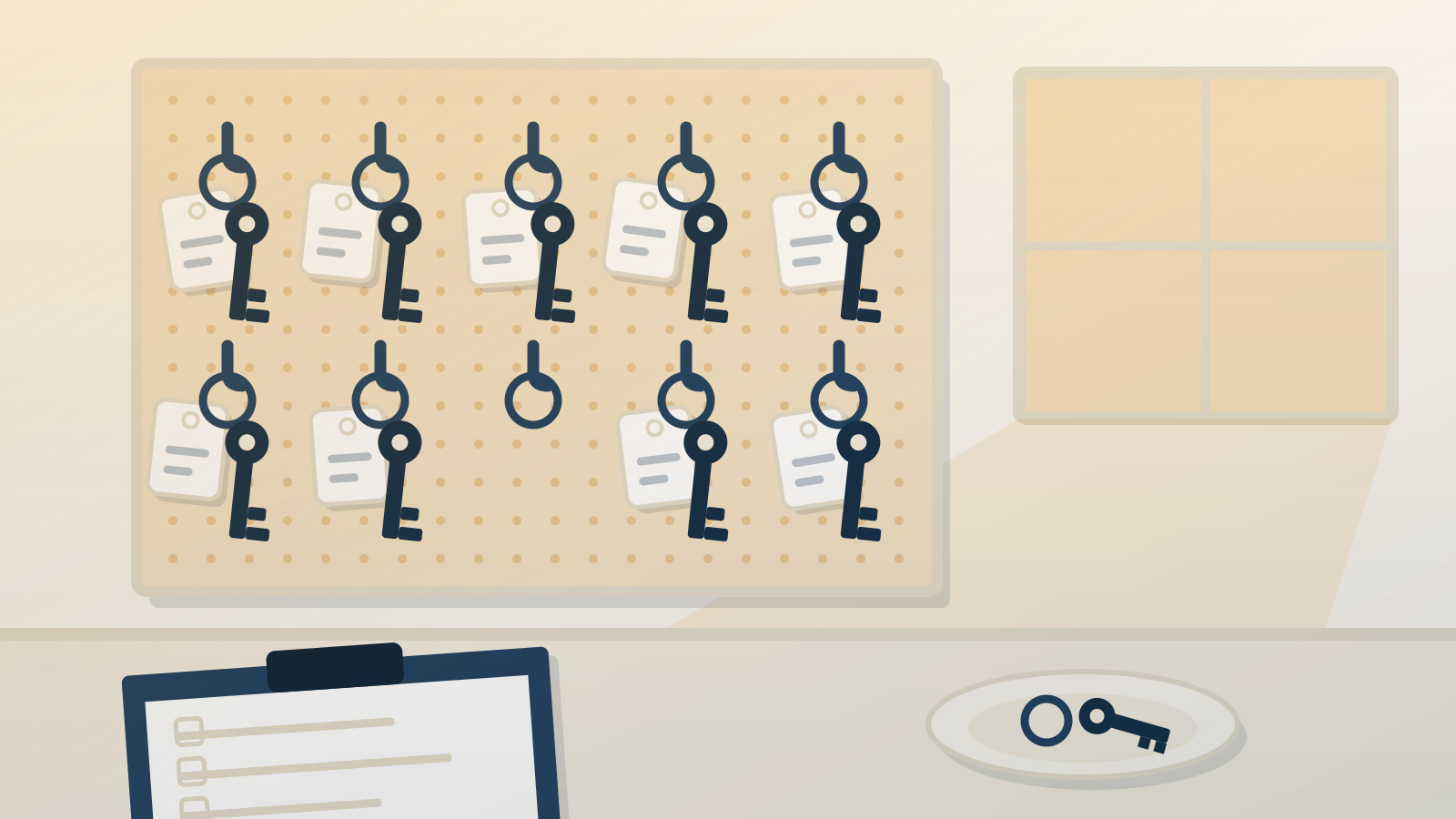
    Behind the table is a seventeen-year-old who is wonderful with children and has never used the check-in system before. Someone shows her how it works in about ninety seconds. She taps in as VBS, because that’s the login on the sticky note attached to the tablet stand, and for the next five days she checks in a hundred and forty children — with their parents’ phone numbers, their allergies, their medications, and the notes about which adult is and isn’t allowed to collect them.

    In August she leaves for college.

    In September, nobody does anything. The VBS login still works. It will still work next June, and the June after that, and the sticky note is still on the stand.

    This isn’t a story about a bad volunteer. She was excellent, and the church was lucky to have her. It’s a story about a pattern that almost every church repeats every summer without noticing: the people with the least training and the shortest tenure are handed access to the most sensitive information the organization holds, and nobody ever takes it back.

    The summer problem, stated plainly

    Vacation Bible School, day camp, sports camps, mission trips, summer interns, the youth trip. For six to ten weeks, a church’s headcount of people-with-access can double.

    They need real access — this isn’t a case where you can hand out nothing. The check-in table needs the check-in system. The registration volunteer needs the registration data. The intern posting daily photos needs the social accounts. The trip coordinator sometimes needs a card to buy fuel and groceries in another state.

    And three things are true of this group at the same time:

    Highest turnover. Many of them serve for one week and are never in the building again in that capacity. Some are students who leave in a fixed month.

    Lowest training. They are recruited late, briefed quickly, and often start on the first morning. Nobody schedules an orientation for a person doing one week of a volunteer job.

    Most sensitive data. Children’s names, ages, photographs, allergies, medical notes, emergency contacts, home addresses, and — in some systems — custody restrictions. There is nothing else in a church’s records more sensitive than that.

    Any two of those would be worth attention. All three, every summer, on a shared login, is the thing to fix — and it is genuinely fixable. This is not a technology problem; it’s a pattern that someone has to own.

    Named accounts, with an end date decided first

    Start here; everything else depends on it.

    A shared login costs you the same four things it costs on a shared office computer: nobody can tell who did what, one leaked password exposes everything, the password never changes because changing it means telling forty people, and every volunteer who ever served still has it.

    There’s a particular version of that for children’s ministry. If a parent raises a concern about how a check-out was handled, or a record was changed, or a photo was posted, a shared login means nobody can establish what happened. That protects nobody — least of all the volunteers, who all become equally unaccountable and therefore equally unclearable.

    Give each summer volunteer their own account, under their own name. Most church management and check-in systems allow unlimited or generous numbers of users, and the ones that charge per user often have a volunteer or limited role at a lower cost or none. Ask your vendor before assuming every extra person is a paid seat.

    If your system genuinely cannot do named volunteer accounts, write that down as a known limitation and raise it at renewal.

    The second half of the pattern is almost embarrassingly simple:

    Nobody gets access without a written end date, and the end date is written down before the access is granted.

    Not “we’ll remove it when they’re done.” That sentence has never once resulted in access being removed. A date. On a list. In the calendar.

    A one-page grid is all you need — a spreadsheet, a shared doc, a printed sheet in a binder. Five columns:

    Name · What they can get into · Start date · End date · Removed (initials and date)

    That’s the whole system. It converts a vague intention into a specific task with a name attached, and it gives you something to hand to an insurer or a board member who asks a fair question.

    Add one calendar entry — mid-September, titled Remove summer access, assigned to a specific person — and this problem is structurally solved for as long as somebody keeps doing it.

    The minimum permissions for the job

    The FTC’s guidance for businesses puts it as the principle of least privilege: each person should have access only to what they need to do their particular job. In a church that translates into a few concrete decisions.

    The check-in volunteer needs to check children in and out. She does not need to edit family records, view giving history, export the directory, or see the full membership database. Most check-in systems have a limited role for exactly this; find it and use it.

    The registration volunteer needs this summer’s registrations. Not the historical file, not the donor records.

    The intern posting photos needs to post. Most social platforms let you grant a person permission to publish without giving them the ability to change the password, remove other administrators, or delete the account. Use that level — and never hand over the account password itself.

    Almost nobody needs a payment card. If a trip leader genuinely does, a dedicated card with a low limit that gets canceled at the end of the trip is far better than a card tied to the operating account. Ask your bank about a virtual or single-use card.

    Two more, a minute each. Turn on multi-factor authentication — the extra code or tap after a password — for any volunteer account that can reach children’s data or money. Microsoft’s research finds it blocks more than 99.2% of account compromise attacks, and it is just as free for a volunteer as for the pastor. And remove the shared passwords from sticky notes on tablet stands; a printed card kept behind the table, changed after the season, is already an improvement.

    Fifteen minutes of orientation, and only three things in it

    You will not get a training session. You’ll get the first five minutes of the first morning, standing at a folding table. So decide in advance what the three things are.

    One: this data is not yours to share. Names, allergies, custody notes, and phone numbers stay in the system and in this building. Not screenshotted, not texted to a co-leader, not typed into a personal spreadsheet, not posted anywhere. “If you find yourself about to photograph the screen, stop and ask me instead.”

    Two: check-out is a security function, not a formality. The person collecting a child is matched to the record every time — when you know them, when there’s a line, when they’re annoyed about it. Custody restrictions are the reason the system exists. A volunteer told this once will hold the line; a volunteer who hasn’t will assume the tags are bureaucracy.

    Three: if anything seems wrong, tell this person. Point at a specific human being. An email that looks odd, a parent who seems agitated, a stranger in the hallway, a screen that logged you into somebody else’s account. Nobody is ever in trouble for asking.

    Then one line about photographs, because summer is when the photo problem happens: know which children have a photo restriction on file, and know that a group of happy kids is not a reason to skip checking. Photo consent deserves its own conversation with your leadership — who may photograph, what may be published where, and how a family opts out — and the summer programs are exactly when a vague policy gets tested.

    The phone in their pocket

    Here’s the modern wrinkle. Many check-in and ministry apps run on personal phones, and a volunteer installing the app on her own device is often the fastest way to get the table staffed.

    That’s a reasonable trade, but be clear-eyed: church data is now on a phone the church doesn’t control, that gets handed to a younger sibling, that may have no screen lock, and that will be traded in eventually.

    Three things make it acceptable:

    Say plainly that the app must be signed out of and deleted when the season ends — and put that on the same one-page grid, with a tick box, so it’s a task rather than a hope.

    Ask for a screen lock and current updates on any phone used for ministry data. That’s not intrusive; it’s the same thing the volunteer’s bank asks of them.

    Prefer a church-owned tablet where you can. One inexpensive tablet in a stand that never leaves the building removes almost all of this, and it’s a strong candidate if you’re buying one device this year.

    And when a volunteer’s access ends, remember that removing their account in the system is what actually matters — an app left on a phone with no working login is just an icon.

    September, and how to say it without awkwardness

    Put the calendar entry in now, whatever month you’re reading this in. Mid-September, one person, thirty minutes:

    Work down the grid and remove every access whose end date has passed. Initial the last column.

    Check each system’s user list separately — check-in, church management, email, the giving platform, the shared drive, the social accounts, the photo library. People collect access in places the grid doesn’t know about.

    Look specifically at the social accounts. They’re the most often forgotten, and the most public when it goes wrong.

    Change any password that was shared during the season, and any that was on a card at a table.

    Then tell the volunteers you did it, in the thank-you note — which brings us to the one thing that actually stops churches from doing any of this.

    It isn’t ignorance. It’s that removing someone’s access feels like an accusation, and in a community built on trust, accusing a faithful volunteer of anything is unthinkable.

    So take the implication away by saying it before it can be inferred, at the start rather than the end:

    “Your access runs through the last week of August. That’s how we do it for everyone, including the pastor’s family. It’s not about trust — it’s that we keep the children’s information locked down to whoever is actually serving right now.”

    Nobody has ever been offended by that. What people are offended by is being singled out, and a policy applied to everybody singles out nobody.

    A church that can say we give named accounts, limited to the role, for a fixed period, and we remove them in September is a church that can answer questions from parents, insurers, and its own board with something better than reassurance. A two-week volunteer with a two-week account is not distrust. It’s ordinary practice, and it protects the volunteer as much as the child.

    What to do this week

    Open the user list for whichever system holds your children’s check-in data and read it top to bottom. Look for names you don’t recognize, accounts called things like VBS or Camp or Front Desk, and people who left. That takes fifteen minutes, and it is usually a surprising fifteen minutes.

    Then make the grid — name, access, start, end, removed — even if the only thing on it today is next summer. And put one entry in the church calendar for mid-September with somebody’s name on it.

    Seasonal access is one strand of a larger question about who can reach what. MissionDefend’s free assessment asks plain-English questions about how your organization handles email, donations, member data, and accounts — including who has access to what, and who removes it — then returns a baseline score with a ranked list of what to fix first.

    No spam and no sales calls — just one email when it’s live.


    MissionDefend provides cybersecurity readiness assessments and educational guidance for churches and nonprofits. It is not a penetration test, a security audit, legal advice, or an incident response service.

    Sources: Federal Trade Commission, Protecting Personal Information: A Guide for Business; Microsoft, mandatory multifactor authentication guidance.